
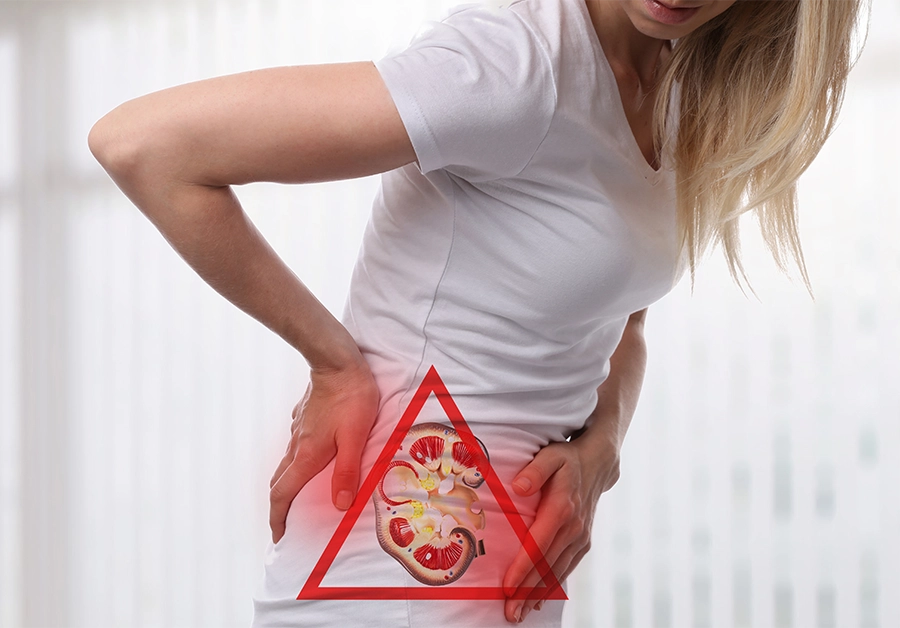
Kidney Stones
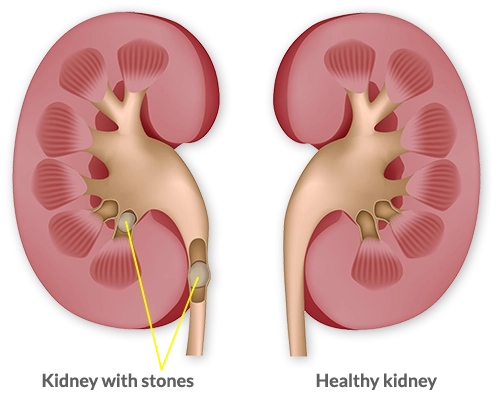
Kidney stones are hard deposits made of minerals and salts that form inside your kidneys.

Types of kidney stones
Signs and symptoms:
- Sharp pain in your back or lower abdomen
- Vague discomfort or dull pain, like a stomach ache that doesn’t go away
- Pain or a burning sensation while urinating with an urge to urinate more frequently, or blood in your urine
- For men, pain in your testicles
- Cloudy or foul-smelling urine
- Nausea and occasional vomiting
- Fever and chills
Kidney stone causes:
A kidney stone forms when substances in your urine become highly concentrated – which makes fluid intake one of the biggest contributing factors. If you do not drink enough water, you may put yourself at a higher risk for developing a stone.
- Exercise (too much or too little)
- Family or personal history of kidney stones
- Food with too much salt or sugar
- Infections
- Medications
- Obesity
- Weight-loss surgery


Calcium stones
Most kidney stones are calcium stones, usually in the form of calcium oxalate. Oxalate is a substance made daily by your liver or absorbed from your diet. Certain fruits and vegetables, as well as nuts and chocolate, have high oxalate content.
Dietary factors, high doses of vitamin D, intestinal bypass surgery and several metabolic disorders can increase the concentration of calcium or oxalate in urine.
Calcium stones may also occur in the form of calcium phosphate. This type of stone is more common in metabolic conditions, such as renal tubular acidosis. It may also be associated with certain medications used to treat migraines or seizures.
Struvite stones
Struvite stones form in response to a urinary tract infection. These stones can grow quickly and become quite large, sometimes with few symptoms or little warning.
Uric acid stones
Uric acid stones can form in people who lose too much fluid because of chronic diarrhea or malabsorption, those who eat a high-protein diet, and those with diabetes or metabolic syndrome. Certain genetic factors also may increase your risk of uric acid stones.
Cystine stones
These stones form in people with a hereditary disorder called cystinuria that causes the kidneys to excrete too much of a specific amino acid.
Diagnosis
If you are experiencing any of the symptoms and have not yet seen your doctor for a diagnosis, now is the time. At your appointment, your doctor will perform a physical exam and take a medical history, including questions about your family history of kidney stones, your diet and any gastrointestinal problems.
To complete your kidney stone diagnosis, your doctor may also perform:
- A blood test to reveal any biochemical problems that can lead to kidney stones.
- An imaging test such as an X-ray, ultrasound or CT scan to find your stone’s location and show any conditions that may have caused it to form.
- A urinalysis to determine whether you have an infection or if your urine contains substances that may form stones.
Prevention
Drinking plenty of fluids is the best way to keep a kidney stone from forming. Your doctor may recommend you drink two to three liters of water (or other pH-neutral drinks) every day. Try to drink evenly throughout the day, monitor how much you urinate, and make sure your urine is light in color. If the weather is hot, or you exercise a lot, drink more to help balance fluid loss.
Other steps your doctor may suggest to prevent another kidney stone:
- Adapt your diet to include more vegetables, fibers and fruits while limiting animal proteins and reducing your sodium intake
- Maintain a healthy weight
- Adopt a healthier lifestyle by exercising two or three times per week and avoiding stress
- Take medicine to reduce your risk, if your doctor advises it
Kidney stone treatments
Treatment options for kidney stones?
Shock Wave Lithotripsy for kidney stones
How do urologists treat large kidney stones?
Think lasers for kidney stones
Don’t suffer through the pain. Call our urology team for kidney stone care.
To learn more, contact a provider or one of our locations — or schedule an appointment.